
Nourishing the Mental Health of Your Consumers
Currently, nearly one-half of global consumers cite mental health as a top issue impacting their nation. We’ve noted the Hartman Group has categorized mental health as a “macro trend,” referencing the 9 in 10 consumers who believe “mental and emotional balance is just as important as physical health,” and younger cohorts (Gen Z and millennials) reporting worse mental health than older generations in a recent McKinsey & Company study.
Quite frankly, there are signals everywhere. In honor of Mental Health Awareness month, we’re providing further proof, and sharing ideas for both our industry and our personal lives.
First. Let’s examine the trifecta.
Burnout
- Glassdoor’s Word of the Year for 2025? Exhausting
- The New York Times one word challenge, requesting women describe how they’re feeling and the resulting: exhausted, existing, and thinly spread
- Use of the term “menty b” – shorthand for “mental breakdown”
- The majority of younger cohorts lamenting “digital fatigue”
- An abundance of social content around sleepcations, stresslaxation, mom fatigue, and the burden of “mankeeping”
- The rise of executive function coaches hired to help high-level individuals support their brain’s “air traffic control system”


Unhappiness
- The United States failing to make last year’s list of the top 20 happiest countries in the World Happiness Report – brought down by low scores from younger cohorts, said to be suffering “quarter” and “midlife” crises
- Professional women experiencing a “midlife collision,” or “role overload” as they juggle care for children, siblings, partners and parents, along with work, finances, and health
Loneliness
- The practice of “ghosting,” by friends, potential mates, and even prospective employers, and its link to mental health
- A recent IPSOS study, concluding Americans are growing lonelier
- The Atlantic’s assertion that Americans have “stopped hanging out,” with face-to-face encounters plummeting
- More Americans citing no close friends, and the phenomenon of “fringe friends,” the casual friends you see only on occasion
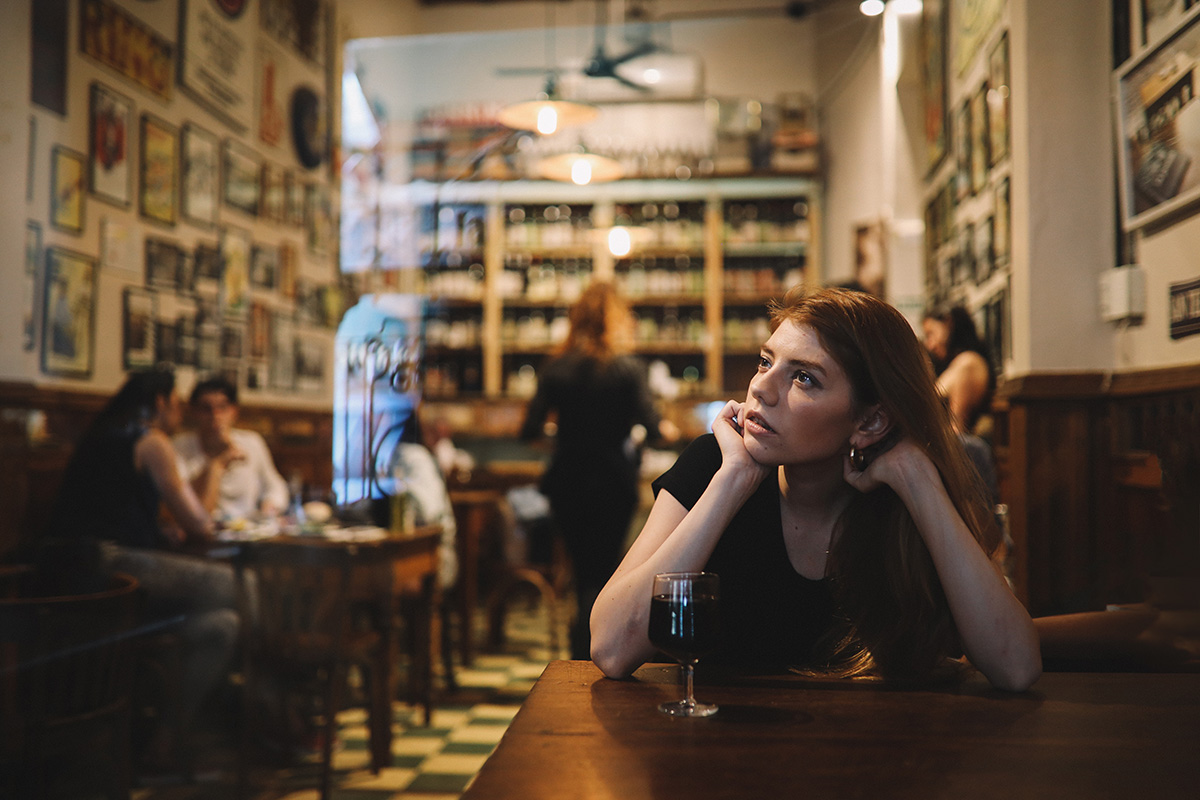
- A 2023 survey revealing 9 in 10 believe “people seem to have less time for each other,” and 6 in 10 agreeing “there’s no sense of community anymore”
We need to turn this around. Here are thought starters for our industry in 2026:
- Doubling down on the sensorial experience
- Maximalist restaurant design, e.g., “more is more” spaces that are highly expressive, crafted and sensorially rich
- Maximalist cocktails – opulent, theatrical, and immersive
- Ingredient powerhouse ADM suggests leveraging fun flavors like roasted peach or grilled banana, and colors that trigger happy memories, such as “mellow yellow,” “sweet mint,” and “summer raspberry”
- Dropping a throwback
- According to experts, “nostalgia serves important psychological purposes, restoring our sense of control, and reminding us of our relationships…which in turn improves our well-being, boosts creativity, and makes us feel youthful and optimistic.” Newstalgia is the current manifestation – taking something iconic and giving it a modern twist. Revisit classic offerings and campaigns
- Fostering connection
- Leverage community-wide get-together’s like “America’s Potluck,” on July 5th, 2026
- Functional ingredients and claims
- A decade ago, the National Library of Medicine published research linking food choice and mental health. A key intervention for those at risk involved adjusting diets to address nutritional deficiencies – namely B vitamins, zinc, omega-3 fatty acids, and those that address inflammation and support the microbiome. Explore fortified products and storied ingredients linked to mental health or mood support
And to support our own mental health, we recommend:
- A digital detox, spending less time on phones and social media
- Introducing new rituals to “program your brain for resilience, clarity and connection.” Start by isolating a particular moment when you feel the most stressed or disconnected, and ritualize something small around it, like 3 deep breaths, a 5 minute daily check-in with a friend or loved one, a quick step outside to feel the sun, air and nature, or a mindful coffee/tea ritual focused on savoring the warmth and aroma
- Replacing office happy hours with office workouts – early-morning yoga, walking meetings, group pickleball, etc.
- Taking up a trendy hobby, e.g., mah-jongg, succulent gardening, or a silent book club
- Trying “soft decluttering,” tidying one small space, like a junk drawer, to occupy the mind and hands, deliver a sense of accomplishment, and improve household function
- Baking something difficult, e.g., a pavlova, babka, or macarons
- Cooking something weird, e.g., tomato soup cake, pink unicorn grits, or Bundt pan roast chicken
Katherine Plueger
Vice President, Strategy & Insights at JT Mega
Katherine Plueger conducts category, competitive and consumer research to develop the actionable insights that lead to better strategy for our clients.